The power goes out, and suddenly every neighbor becomes an electrical engineer. One guy fires up a generator that sounds like an angry lawnmower. Meanwhile, the lady across the street plugs her fridge into a quiet box and goes back to her book. So who got it right? The portable power station vs generator question comes down to two things: what you need to run, and for how long. This guide walks through both without the hype. Well, mostly without the hype. It is an affiliate post, after all.
Quick note: some links in this post are affiliate links. If you buy through them, I earn a small commission at no extra cost to you. That money buys more batteries, which I then write about. It is a cycle.
Portable Power Station vs Generator: The Short Version
A portable power station is a big battery with outlets on it. You charge it ahead of time. Then it runs your gear silently until the battery is empty. After that, it is a very expensive doorstop.
A generator, on the other hand, burns fuel to make electricity. Most models run on gasoline, propane, or both. As a result, it keeps going as long as you keep feeding it. It also makes noise and exhaust, which matters more than the box suggests.
So here is the core difference. One stores power. The other makes it.
What a Portable Power Station Actually Does
Inside the case, you get a lithium battery, an inverter, and a row of outlets. Most units offer regular wall plugs, USB ports, and a car-style 12-volt socket. You can recharge it from a wall outlet, your car, or solar panels.
Two numbers matter on the label. Capacity, measured in watt-hours, tells you how much energy it holds. Output, measured in watts, tells you how much it can deliver at one time. For example, a 2,000 watt-hour unit could run a 100-watt load for roughly 20 hours. In real life, you lose some energy along the way, so expect a bit less.
What a Generator Actually Does
A generator is a small engine attached to an alternator. You pull a cord or push a button, and it starts making power. Easy enough.
However, not all generators are equal. Conventional portable generators are loud and cheap per watt. Inverter generators cost more, but they run quieter and produce cleaner power for electronics. In addition, they usually sip less fuel at light loads. If you plan to plug in a laptop or a TV, the inverter type is the safer bet.
How Much Home Backup Power Do You Really Need?
Before you buy anything, make a list. Not a wish list. A survival list.
Most people need the fridge, some lights, phone charging, and the internet router. Some homes also need a sump pump, a well pump, or a furnace blower. Medical gear like a CPAP machine goes at the top of the list, because breathing is not optional.
Next, find the wattage on each device. Look for a sticker on the back or bottom. Motors like fridges and pumps also need a burst of extra power to start. That startup surge can run two or three times the normal running watts. Therefore, your backup needs to handle the surge, not just the average.
A Quick Math Example
Let’s say you want to keep the basics alive for one day. A typical fridge might use one to two kilowatt-hours over 24 hours. Your router uses very little, often under 20 watts. A few phone charges barely register.
Add it up, and a modest setup might need around two kilowatt-hours per day. In other words, a mid-size power station covers you for about a day. That works fine for a short storm outage. For a three-day ice storm, though, you will need more battery, a way to recharge, or a generator.

One sheet, front and back. Everything your house needs to ride out three days without power, sorted so you can knock it out in a weekend. Print it, stick it on the fridge, start checking boxes.
When a Generator for Power Outage Duty Makes More Sense
Some houses simply need more juice. If you have a well pump, you cannot flush the toilet without power. Similarly, a basement sump pump during a spring storm is not something you want to ration.
A generator for power outage use shines in these situations:
- Outages that last several days
- Big loads like well pumps, sump pumps, or window air conditioners
- Rural homes where crews arrive last
- Households that need to run many things at once
Generators also win on cost per watt. For the price of a large power station, you can often buy a generator with several times the output. Of course, that bargain comes with homework.
The Carbon Monoxide Problem
Generators produce carbon monoxide. You cannot see it or smell it, and it can kill you in your sleep. Never run a generator inside your house or garage. That includes an open garage, because an open door does not clear the gas fast enough.
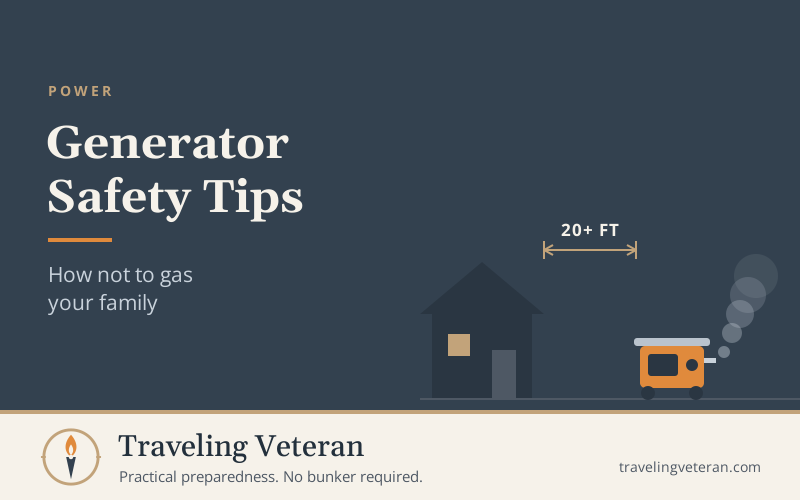
Instead, place it outside, at least 20 feet from the house. Point the exhaust away from windows and doors. Also, install battery-powered carbon monoxide alarms on every floor. They cost less than a tank of gas. This part is not a joke, so I will skip the joke.
Fuel Is the Part Everyone Forgets
Here is a fun surprise. Gas stations need electricity to pump gas. So during a big outage, your fuel plan is whatever you stored beforehand.
Gasoline also goes stale. Untreated gas can gum up a carburetor within a few months. For that reason, add fuel stabilizer to anything you store. Propane, by contrast, keeps for years in a tank. That is why dual-fuel generators are popular with people who think ahead.
When a Portable Power Station Beats a Generator
Now for the quiet option. A power station makes zero exhaust, so you can use it indoors. That alone makes it the only real choice for many apartments, condos, and townhouses.
It also wins when:
- Outages in your area usually last hours, not days
- You need to run medical equipment overnight in a bedroom
- Your neighbors live close enough to hear you chew
- You hate engine maintenance with a passion
On top of that, there is nothing to change, clean, or winterize. You charge it, top it off every few months, and forget it exists. Honestly, that is the dream relationship.
The downside is capacity. A battery holds what it holds. Moreover, big units get expensive fast, and recharging from a wall outlet requires, well, a working wall outlet.
Is a Solar Generator for Home Backup Worth It?
First, a small reality check. A “solar generator” is just a portable power station paired with solar panels. The marketing department named it. The engineers sighed.
That said, the pairing solves the biggest weakness of a power station. With panels, you can recharge during a long outage without fuel. A solar generator for home use works best for longer outages and for anyone who hates storing gasoline.
However, solar depends on the sun, and storms are famously cloudy. A few hundred watts of panels will not recharge a large battery in one gray afternoon. So treat solar as a slow, steady refill, not a magic faucet.
Portable Power Station vs Generator: The Real Cost
Up front, a generator usually costs less for the same output. A decent inverter generator might cost less than a mid-size power station. Meanwhile, the power station might deliver a fraction of the total energy.
Over time, though, the math shifts. Generators need fuel, oil changes, and the occasional carburetor cleaning. Power stations need almost nothing. Many newer units use lithium iron phosphate batteries, often rated for thousands of charge cycles.
Then there is the cost nobody puts on a price tag. A generator needs you to go outside at 2 a.m. in a storm to refuel it. A power station needs you to stay in bed. Put whatever value you like on that.
Portable Power Station vs Generator for Different Houses
Every house needs a different amount of home backup power. Here is how the choice usually shakes out.
Small Home, Condo, or Apartment
Go with a portable power station. You probably cannot run a generator safely anyway. Pick a unit with enough capacity for your fridge and devices, plus a solar panel if you have a balcony.
Suburban House With a Basement
This one depends on your sump pump. If the basement floods in heavy rain, a generator earns its keep. Otherwise, a large power station handles the fridge, lights, and internet during typical outages.
Rural House on a Well
Get a generator. A well pump needs serious starting power, and your road is last on the repair list. Furthermore, ask an electrician about a transfer switch or interlock kit. That lets you power selected circuits safely, instead of running extension cords through a cracked window.
Should You Get Both?
Many prepared households do exactly that. The generator runs during the day to cover big loads and recharge the battery. Then the power station takes the night shift, quietly. As a result, you sleep without an engine rattling under the bedroom window. It costs more, but it covers nearly every scenario.
Buying Tips Before You Pick a Portable Power Station or Generator
Before you click the button, check these details. They separate a good buy from a garage ornament.
For power stations:
- Look for lithium iron phosphate (LiFePO4) batteries for a longer lifespan.
- Make sure the inverter is pure sine wave, especially for medical devices.
- Check the surge rating, not just the running watts.
- Consider expandable models that accept extra battery packs.
For generators:
- Choose an inverter model if you will power electronics.
- Consider dual fuel so you can store propane.
- Look for automatic carbon monoxide shutoff.
- Get electric start, because pull cords and bad shoulders do not mix.
One more thing. Never plug a generator into a wall outlet to “backfeed” your house. It can electrocute utility workers down the line. Instead, have a licensed electrician install a transfer switch.
Conclusion: Portable Power Station vs Generator, Decided
So which one fits your house? The honest answer to portable power station vs generator depends on how long your outages last and what you need to run. For short outages, small homes, and quiet nights, a power station wins. For long outages, wells, and sump pumps, a generator does the heavy lifting. And if you can swing it, owning both covers almost everything.
Either way, buying something now beats shopping by flashlight later. I keep my current picks for both on the Field Kit page, sorted by home size. Take a look, do the math on your fridge, and pick the one that fits. Then grab my free 72-Hour Kitchen Table Checklist so the rest of your plan catches up with your new toy.

JT
I'm JT. I learned to fix heavy equipment in the military and never really stopped. Now I'm a dad and a grandpa who spends too much time thinking about what happens when the power's been out for four days. This site is where I write it down. No bunkers required.
One sheet, front and back. Everything your house needs to ride out three days without power, sorted so you can knock it out in a weekend. Print it, stick it on the fridge, start checking boxes.